Investing in Central MA: North Quabbin Opportunities

Is Central Massachusetts a good place to invest in real estate and small business right now?
Yes, and the North Quabbin Region in particular offers a combination of lower acquisition costs, active state and regional incentive programs, and a growing local development ecosystem that metro-area investors often overlook. Median sale prices in towns like Athol, Orange, and Gardner remain well below statewide averages, and state programs including the Massachusetts Economic Development Incentive Program (EDIP) and New Markets Tax Credits are actively funding projects in this corridor.
We work with investors across the North Quabbin Region every year, and the question we hear most often is some version of: "Is this area actually worth it?" The honest answer is that it depends on your strategy, your timeline, and your appetite for a market that rewards patience and local relationships over quick flips. Here's what we tell every investor who asks us that question.
What the Market Looks Like Right Now
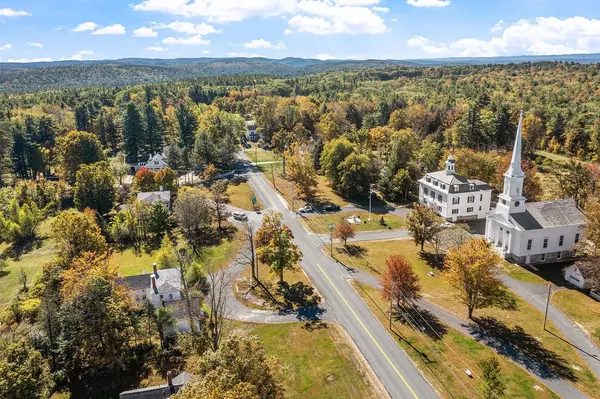
The North Quabbin Region is a rural, small-town corridor spanning Worcester and Franklin Counties. Towns like Athol, Orange, Erving, New Salem, and Petersham make up the core of what regional planners define as a nine-town rural area with a combined Worcester County population of roughly 15,815. Population has trended downward over the past decade, which is a real factor to weigh, but it also means entry prices stay accessible and competition from institutional buyers is limited.
The table below shows the most recent trailing-90-day sales data for key North Quabbin and Central MA towns, as of August 2026. These are area-level medians; individual property values vary by condition, street, and timing.
| Area | Median Sale Price | Median Days on Market |
|---|---|---|
| Athol | $330,000 | 52 |
| Orange | $336,250 | 35 |
| Winchendon | $387,000 | 44 |
| Gardner | $357,550 | 48 |
| Greenfield | $328,500 | 41 |
These price points are a fraction of what you'd pay in Greater Boston or Worcester's core. And while days on market in Athol (52 days) suggest a more deliberate pace than tighter suburban markets, Orange's 35-day median tells a different story, one where well-priced properties still move.
For broader context, the Bureau of Labor Statistics Massachusetts Economy at a Glance (data extracted August 13, 2026) tracks statewide employment and unemployment trends through mid-2026. Massachusetts as a whole has maintained a relatively stable labor market, which supports rental demand and business activity even in rural corridors.
On income, the most recent integrated town-level data comes from the Massachusetts Department of Public Health socioeconomic charts and tables, using American Community Survey 2015–2019 five-year estimates. As of August 17, 2026, these remain the latest published town-level figures. They show median household income of $49,653 in Athol and $57,547 in Orange, both significantly below the statewide median. That gap matters for investors: it shapes rental pricing ceilings, consumer spending capacity, and the type of businesses that thrive here. This is a market where cash-flow and value-add strategies tend to outperform appreciation plays.
If you want to dig into local demographics and labor force data before making a move, the Town of Athol's demographic data portal and its occupation data page are genuinely useful starting points. Athol's Economic Development office maintains these resources specifically to support investor and business due diligence.
And if you're watching what larger investors are doing in markets like this, our post on big investors backing off and why that's your opening lays out why this moment favors individual buyers and small operators.
Where the Real Opportunities Are
Value-Add Residential and Small Multifamily
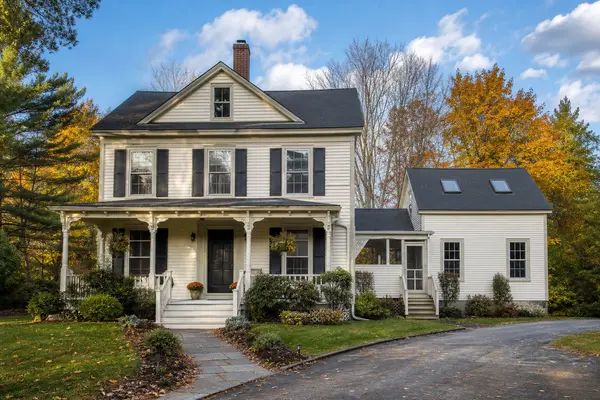
The most straightforward entry point for most investors is residential, particularly older single-family and small multifamily properties that need work. North Quabbin's housing stock skews older, which means there's a steady supply of properties priced below replacement cost where the right rehabilitation adds real value. The key is knowing which towns have the rental demand to support your numbers, and that's a conversation that requires local market knowledge, not just a Zillow search.
Your specific numbers depend on the property's condition, the local rental market, and your financing structure. That's exactly the kind of analysis we walk our clients through before they make an offer.
Vacant Industrial and Commercial Redevelopment
This is where North Quabbin gets genuinely interesting for investors with a longer horizon. The Franklin County Community Development Corporation (FCCDC) has identified redevelopment of vacant mills, warehouses, and underutilized industrial parcels as a top regional priority. Athol and Orange both have older industrial properties that regional planners are actively trying to bring back into productive use, whether as light manufacturing, mixed-use, maker-space, or storage.
The FCCDC runs a revolving loan fund that had $3.7 million in loans receivable outstanding at the end of FY 2022, a concrete sign of active small-business lending capacity in the region. Investors can work alongside CDCs by co-investing in larger projects or partnering on business incubators. The Central Massachusetts Regional Planning Commission (CMRPC) also provides data, mapping, and planning support that can inform site selection and due diligence.
Athol's Economic Development Plans and Reports portal includes a 2024–2025 economic update and development outlook that is the most recent comprehensive town-level planning document publicly available as of August 17, 2026. It addresses ongoing initiatives, industrial site reuse, and business support programs directly relevant to investors scoping Athol.
Conservation-Aligned and Natural Resource Enterprises
A lesser-known angle: the Wildlands and Woodlands Greater Quabbin Conservation Investment Zone assessment makes the case that conservation and economic development can be intentionally linked in this region. The reports (planning-level documents, not confirmed projects) highlight opportunities in wood products manufacturing, forestry enterprises, and outdoor recreation infrastructure. A companion report notes that New Markets Tax Credits (NMTCs) can finance qualifying projects in eligible census tracts in Athol and Orange, making certain rural enterprise investments more financially viable than they'd appear at face value.
On the recreation side, 2026 legislation championed by Senator Jo Comerford authorized statewide investments including $500 million for the Municipal Vulnerability Preparedness (MVP) grant program, $132.5 million for Food Security Infrastructure Grants, and dedicated funding for accessible trails. These are public-sector investments that can reduce infrastructure barriers and make private investment in small hospitality, outdoor outfitters, and agri-tourism more viable in North Quabbin towns. Note that these funds were authorized in 2026 and are slated for FY 2027–2028 disbursement; they haven't yet flowed to specific local projects as of August 2026.
State Incentives Worth Knowing
Investors who skip the incentive research leave real money on the table. Here are the programs most relevant to North Quabbin as of 2026.
Massachusetts EDIP Tax Credits
The Massachusetts Economic Development Incentive Program (EDIP) FY 2025 annual report shows that in FY 2025, the state certified 16 projects statewide, generating $214 million in private capital investment, 959 jobs created, and 4,297 jobs retained. The Central Massachusetts region receives a share of these projects. EDIP awards state tax credits and can support local property tax agreements for qualifying businesses that create and retain jobs. Eligibility and structure are determined case by case through local economic development staff and the state's Economic Assistance Coordinating Council.
New Markets Tax Credits
For investors looking at larger commercial or industrial projects, NMTCs allow private capital to flow into high-poverty rural communities at favorable tax treatment. Athol and Orange qualify in certain census tracts. These are complex financing tools that require working with a qualified NMTC allocatee, but the Greater Quabbin planning documents confirm the region's eligibility and the types of projects, such as community facilities, sawmills, and food infrastructure, that fit the program's intent.
The Quabbin Host Community Trust Fund
In April 2026, the Massachusetts legislature established the Quabbin Host Community Trust Fund, which will direct $50,000 annually to each of the 11 Quabbin watershed towns in FY 2027 and FY 2028. This is a signal that the state is investing in the long-term viability of these communities, and for investors, it means additional local funding streams for community services and infrastructure are coming online in the near term.
Tips for Getting Started
- Start with local government. Because North Quabbin towns are small, you can often get direct access to town administrators and economic development staff. Athol's Economic Development office, in particular, is set up to help investors navigate site selection, zoning, and available incentives.
- Verify zoning before you go under agreement. Each town operates under its own Massachusetts municipal zoning bylaws. What's permitted in an industrial zone in Athol may differ from what Orange allows. Check the specific bylaw, not just the general category.
- Understand the income profile. Lower median incomes mean rental rate ceilings are real. Run your numbers conservatively and plan for longer stabilization timelines than you'd expect in a metro market.
- Build relationships with regional CDCs. The FCCDC and CMRPC are not just data sources; they're partners. Investors who engage with these organizations early often find paths to financing, technical assistance, and co-investment that aren't publicly advertised.
- Think multi-stakeholder. Successful projects in this region typically involve town government, CDCs, regional planning commissions, conservation groups, and state agencies. If your project requires any of those relationships, build them before you close, not after.
Every investment situation is different, and the only way to know whether a specific property or project pencils out is to run the numbers with someone who knows this market. That's what we're here for.
Frequently Asked Questions
Is the North Quabbin region a good place to invest in light industrial or manufacturing space?
It can be, especially if you're focused on redevelopment of existing vacant or underutilized buildings rather than ground-up construction. Regional planning documents from the Franklin County CDC explicitly identify vacant mills and industrial parcels as priority redevelopment targets, and towns like Athol actively support investors through their Economic Development office. The key variables are zoning, the specific property's condition, and your ability to access incentive programs like EDIP tax credits or New Markets Tax Credits, which require working directly with local and state economic development staff.
What state or regional incentives are available for investing in Athol or Orange?
The two most relevant programs are the Massachusetts EDIP tax credit program (which awarded credits tied to $214 million in private investment statewide in FY 2025) and New Markets Tax Credits, which can finance qualifying projects in eligible census tracts in both Athol and Orange. The Franklin County CDC also operates a revolving loan fund for small businesses in the region. Eligibility and structure for all of these programs are determined case by case, so the right first step is contacting Athol's Economic Development office or the FCCDC directly.
How do incomes in Athol and Orange compare to the rest of Massachusetts, and what does that mean for investors?
The most recent integrated town-level data, from the ACS 2015–2019 five-year estimates published by the Massachusetts Department of Public Health, shows median household incomes of $49,653 in Athol and $57,547 in Orange, both well below the statewide median. For investors, that means rental rate ceilings are real and consumer-facing businesses need to be priced for a modest-income market. It also means acquisition costs tend to be lower, and value-add and cash-flow strategies tend to outperform appreciation-only plays in this corridor.
Can the Franklin County CDC help finance my small business or investment project in the North Quabbin area?
Yes, the FCCDC operates an active revolving loan fund focused on small businesses across its service area, which includes the North Quabbin towns. At the end of FY 2022, the fund had $3.7 million in loans receivable outstanding, a sign of a long-standing and active lending program. Beyond financing, the FCCDC provides technical assistance and can connect investors with regional planning resources. Reaching out to the FCCDC early in your planning process is one of the most practical steps a new investor in this region can take.
What are the main economic development priorities in Athol and the North Quabbin towns right now?
Based on Athol's 2024–2025 economic development outlook (the most recent comprehensive town-level planning document publicly available as of August 2026) and the Franklin County CDC's regional capital improvement plan, the top priorities are redevelopment of vacant industrial and commercial sites, support for local businesses, sustainable manufacturing, agriculture, clean energy, and positioning Athol as a gateway community between Central and Western Massachusetts. Conservation-aligned enterprises, outdoor recreation infrastructure, and food system investments are also priorities at the regional level, supported by both planning documents and 2026 state legislation.
The North Quabbin Region won't make headlines the way Greater Boston does, but for investors who understand the market, engage with local institutions, and bring patient capital, it offers real opportunities at price points that metro markets can't touch. If you're evaluating a specific property or project in Athol, Orange, Gardner, Winchendon, or anywhere across Central or Western Massachusetts, we'd be glad to walk through the numbers with you.
Schedule a consultation with the Hometown Team to talk through your investment goals and get a grounded, local perspective on what's realistic in this market: Request a consultation here.
Equal Housing Opportunity. Sara Lyman, BROKER, REAL BROKER LLC. This article is provided for general informational purposes only and does not constitute legal, tax, or financial advice. Readers should confirm their own numbers and circumstances with a qualified attorney, tax advisor, lender, or closing officer.
Recent Posts