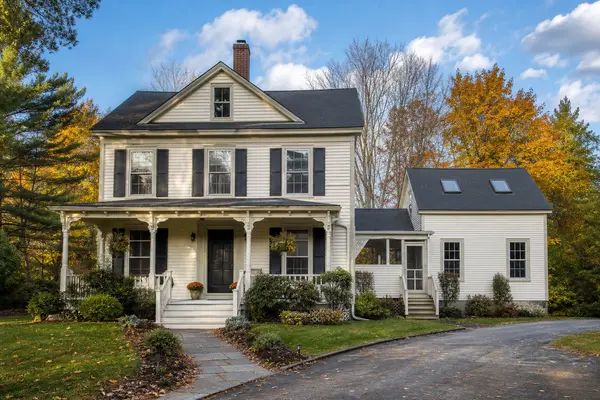
Why Savvy Investors Are Looking at Historic Mansions & Why the Wheeler Mansion Is the One They Can't Ignore
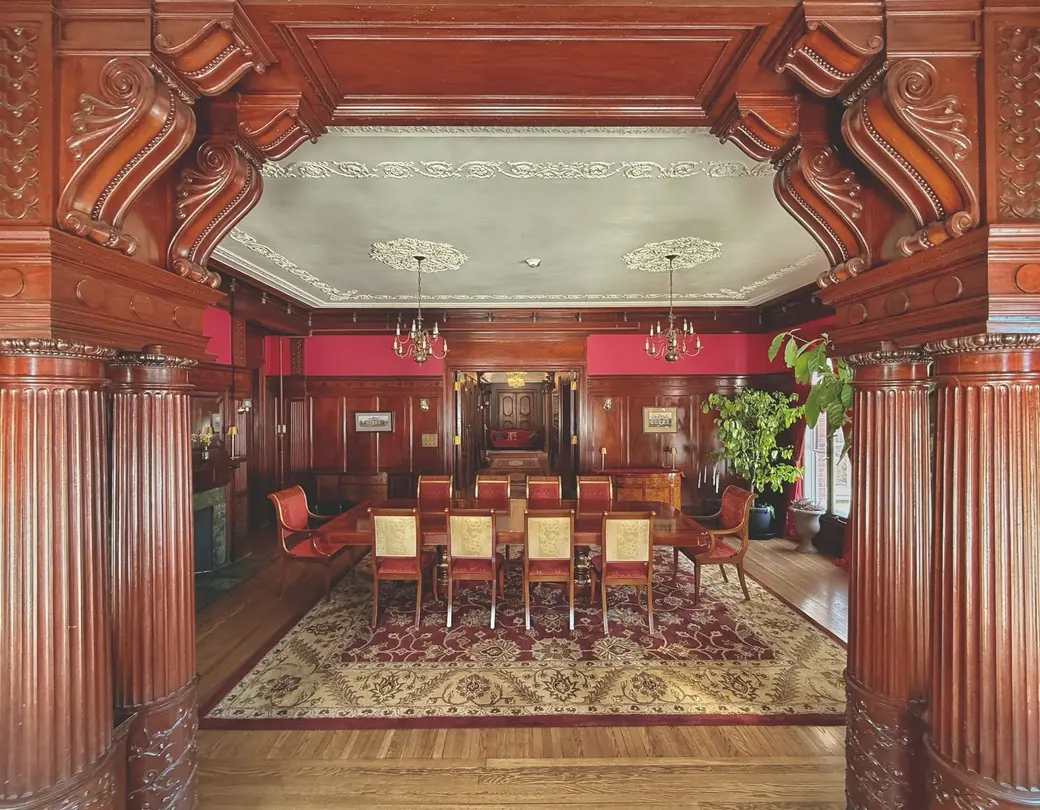
Can a historic mansion be a smart real estate investment in 2026? Yes and the data is increasingly hard to argue with. Boutique historic properties are outperforming branded hotels on revenue per available room, experiential travel is the fastest-growing segment in hospitality, and authenticity has become the single most valuable amenity a property can offer. The Wheeler Mansion in Orange, Massachusetts is the rare asset that checks every box and it's available now.
Something is shifting in the world of real estate investment.
The spreadsheet-driven buyers the ones who built their portfolios on cap rates, stabilized multifamily, and triple-net leases are starting to look at a different kind of asset. Not because the numbers don't work anywhere else. But because the numbers here are working better.
Historic properties. Boutique inns. Licensed event venues. Experiential destinations.
The kind of real estate that doesn't just generate income it generates stories. And in 2026, stories are currency.
This isn't sentiment. This is a macro trend that's been building for a decade and has now hit an inflection point. And if you understand it, the Wheeler Mansion at 75 East Main Street in Orange, Massachusetts stops looking like a quirky historic property and starts looking like exactly what it is: one of the most compelling hospitality investment opportunities in New England.
The Macro Trend Every Smart Investor Needs to Understand
Experiential Travel Has Permanently Replaced Commodity Travel
The data is unambiguous. Travelers are no longer choosing where to stay based on loyalty points and predictable amenities. They're choosing based on experience, authenticity, and story.
According to American Express's 2024 Global Travel Trends Report, over 74% of travelers now prioritize unique, local experiences over standardized hotel stays. The same report found that travelers are willing to pay a significant premium — sometimes 40–60% above comparable branded hotel rates — for accommodations that feel genuinely different.
Boutique and independent hotels have responded. According to Hotel Management, boutique properties have consistently outperformed branded hotels on RevPAR revenue per available room for the past several years running. Guests aren't just paying more per night. They're staying longer, leaving better reviews, and returning more frequently.
The short version: the market has moved. Authenticity is no longer a niche preference. It's the dominant consumer demand in hospitality.
The Boutique Event Venue Market Is Outpacing Supply
Weddings alone tell the story. The average cost of a wedding in Massachusetts now exceeds $35,000 and couples are increasingly choosing venues that offer something a hotel ballroom cannot: atmosphere, character, and a built-in story to tell their guests.
According to The Knot's 2024 Real Weddings Study, unique venue bookings, historic estates, barns, mansions, and private properties — have grown faster than any other venue category over the past five years. Demand is outpacing supply dramatically in New England, where the inventory of authentic, licensable event spaces is naturally constrained by geography and history.
The investor who owns that supply owns the market.
Paranormal Tourism Is a $6 Billion Industry and Growing
It sounds like a punchline until you look at the numbers.
Ghost tourism, haunted history tours, paranormal overnight experiences, and destination properties with documented supernatural histories generated an estimated $6 billion in revenue in the United States in 2023, a figure that has grown every single year for the past decade. Travel publications including Condé Nast Traveler and Travel + Leisure now regularly feature paranormal destinations as premium travel experiences.
The audience is enormous, the willingness to pay is high, and the barrier to entry is almost insurmountable: you cannot manufacture 120 years of history and ghost stories. You can only acquire them.
The Wheeler Mansion: A Case Study in Everything the Market Is Looking For
Every trend above converges at a single address: 75 East Main Street, Orange, Massachusetts.
The Revival Wheeler Mansion is a 13,589 square foot, 1903 Colonial Revival brick estate on 1.54 acres in downtown Orange, Franklin County currently operating as a licensed boutique inn, event venue, and short-term rental destination. It sits on Route 2A with 523 feet of road frontage, 10,000 vehicles of daily traffic, 30 on-site parking spaces, and full sprinkler system.
And it is listed at $1,222,000, priced under its assessed value of $1,273,700, with the majority of period furnishings and an active liquor license included in the sale.
Let that land for a moment.
An operating hospitality business. A liquor license. Eight revenue-generating guest rooms. A licensed event space. A carriage house. A private hedge maze. 120 years of irreplaceable architectural authenticity. All of it priced below assessed value.
The Eight Revenue Streams Under One Roof
This is where the Wheeler Mansion separates itself from every other investment property in Central Massachusetts.
Most commercial properties have one or two income channels. This property has eight, all of them already operational or immediately activatable from day one.
1. Boutique Inn Nightly Revenue Eight uniquely designed guest rooms with period furnishings, active booking infrastructure, and an established guest base. Premium historic inn rates in New England range from $150–$400+ per night. At even modest occupancy, the math works.
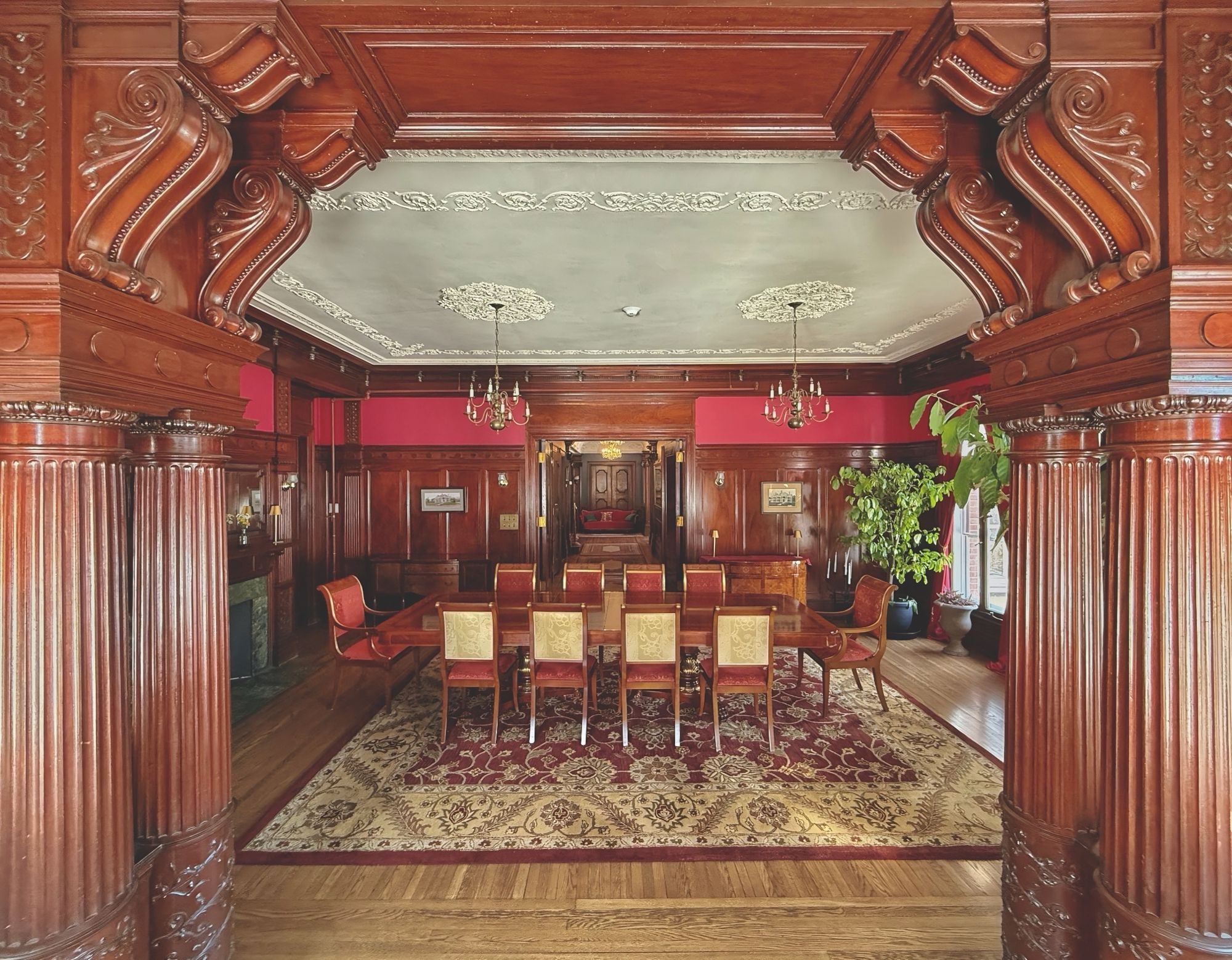
2. Licensed Event and Wedding Venue A full event venue with formal dining room, grand parlor, grand foyer, mahogany bar, and outdoor grounds, already licensed and operating. New England wedding venues with this level of authenticity command $5,000–$15,000 per event. The demand in Franklin County is real and growing.
3. Active Liquor License A Massachusetts liquor license is not a given. It is a regulated, limited asset that takes significant time and capital to obtain, when it can be obtained at all. This one conveys with the sale.
4. Short-Term Rental Income Active Airbnb listings generating income from the carriage house bridal suite and additional units. Zero ramp-up time. Zero platform setup. The listings are live.
5. Paranormal Tourism and Destination Experiences Ghost tours, haunted history nights, paranormal investigation events, and overnight paranormal experiences. A national social media following already exists. The infrastructure is built. The audience is waiting.
6. Film, Television, and Commercial Location Rental Authentic Gilded Age interiors that no set designer can replicate. Period drama productions, horror film projects, luxury brand shoots, and editorial photography all pay premium rates for locations like this, typically $1,500–$5,000 per day with minimal property disruption.
7. Corporate Retreat and Executive Conference Center A private, distinctive, non-hotel environment for executive off-sites, board retreats, and corporate team experiences. The market for premium non-traditional corporate retreat venues is expanding rapidly as companies seek differentiated offsites.
8. Culinary Events and Private Dining A commercial kitchen, a licensed bar, and formal dining room with original plasterwork medallions and crystal chandeliers. Chef's dinners, tasting events, culinary pop-ups, and private dining experiences are a natural and high-margin extension of the existing infrastructure.
The Moat: Why This Asset Cannot Be Replicated
Here is the argument that sophisticated investors understand immediately.
You can build a new hotel. You can build a new event venue. You can obtain permits, hire architects, and construct something beautiful from scratch.
But you cannot build 120 years of hand-carved mahogany millwork. You cannot manufacture original plasterwork medallions, a coffered billiards room ceiling with a stained-glass skylight, a grand staircase with a hand-turned balustrade, or marble fireplaces that have been warming rooms since 1903. You cannot create a hedge maze in a day, a month, or a year. You cannot invent ghost stories.
These things exist or they don't. At the Wheeler Mansion, they exist.
That irreplaceability is the moat. And in real estate investment, a moat is everything.
Why Franklin County, Massachusetts ........Why Now?
Orange, Massachusetts sits at the heart of the North Quabbin region, along the Route 2 corridor with access to Boston, Worcester, Vermont, and New Hampshire. Franklin County is quietly becoming one of the most interesting emerging hospitality markets in New England.
Values here remain dramatically below the eastern Massachusetts corridor. Heritage tourism is growing. The inventory of authentic, licensable event and hospitality venues is constrained. And the region's reputation as an outdoor recreation and agritourism destination is building momentum year over year.
The investor who moves here now, before the market fully discovers what locals already know, is positioned exactly where every smart investor wants to be: early.
Frequently Asked Questions: Investing in a Historic Mansion in Massachusetts
Is a historic mansion a good real estate investment? Historic mansions with operating hospitality businesses, existing licenses, and established revenue streams can be strong investments particularly in markets where supply of authentic experiential venues is constrained. The Wheeler Mansion in Orange, MA combines an active liquor license, eight potential revenue streams, and irreplaceable Gilded Age architecture priced under assessed value, making it a compelling acquisition for hospitality investors in New England.
What are the best uses for a historic mansion investment property? The most successful historic mansion investments typically operate as boutique hotels, licensed event and wedding venues, short-term rental destinations, corporate retreat centers, paranormal tourism destinations, film and commercial location properties, or some combination of all of these. The Wheeler Mansion in Franklin County, Massachusetts is structured to support all eight simultaneously.
What should I look for when buying a historic inn or event venue in Massachusetts? Key factors include existing licensing (liquor license, event venue permit, occupancy certification), current revenue streams and occupancy data, the condition of the mechanical systems relative to the historic fabric, commercial kitchen infrastructure, parking capacity, and zoning flexibility. The Wheeler Mansion checks every box including 30 on-site parking spaces, an active liquor license, and Commercial zoning.
The Bottom Line: You Can't Build This. You Can Only Buy It.
The best investments don't just generate returns. They generate pride.
The Wheeler Mansion at 75 East Main Street in Orange, Massachusetts generates both and there is only one of them on earth.
Turnkey boutique inn. Licensed event venue. Active liquor license. Eight revenue streams. 120 years of history. Priced under assessed value at $1,222,000.
This is not a fixer-upper. This is not a project. This is a fully operating, income-producing, nationally recognized destination asset looking for its next visionary owner.
The only question is whether that's you.
Ready to explore the numbers and walk the property?
Private showings are available by appointment. 48-hour notice required. Proof of funds or a lender qualification letter required prior to scheduling.
Text Sara Lyman directly at 978-652-3092 to request your private showing or investment package for the Wheeler Mansion.
Sara Lyman is Team Leader of the Hometown Team at Real Broker, LLC, serving Franklin County, North Worcester County, North Hampshire County, and Southwestern New Hampshire. Modern Real Estate. Hometown Roots.
This post is for informational and marketing purposes. All property details subject to verification. Prospective buyers are encouraged to conduct their own due diligence. Sara Lyman is not a licensed financial advisor — consult your financial and legal advisors before making any investment decision.
Recent Posts